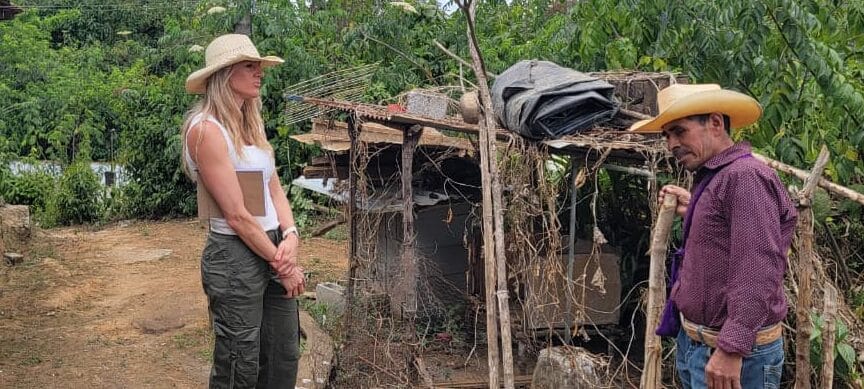
My trip to Guatemala with Healing Waters was my first time visiting the field with the organization, and I carried a quiet mix of anticipation, gratitude, and nervous energy as I prepared to go. I had traveled to the developing world before, but it had been a while. There is always something sacred and unsettling about those final days before a trip like this—the wondering, the preparing, the awareness that you are about to see things that will stay with you. I felt both excited and uneasy, holding the familiar pre-trip jitters in my chest.
Before I left, Mark encouraged me to be fully present. That simple phrase became my mantra for the entire journey: be fully present. I repeated it to myself often—on the plane, in the car, in conversations, and in moments when what I was seeing felt too heavy to hold all at once.
When we arrived in Guatemala City, we were greeted by Leti, our International Controller. It was such a gift to finally meet in person someone I had only seen through Zoom squares and virtual meetings. There was an immediate warmth about her, and I felt an instant connection rooted in our shared love for this work and the people it serves.
After a brief lunch, we headed to a small local airport to charter a flight to Huehuetenango, a department in western Guatemala near the Mexican border. Huehuetenango. “Huehue,” as many call it is where Healing Waters has been working in Pajal. Phase 1 of the project has already been completed, and the hope is to move forward with Phase 2.
Because Huehue sits near the border, it carries real risks. The region is known for drug trafficking and crime, and it has been labeled a Level 4 “Do Not Travel” area by the U.S. State Department, meaning even government employees are restricted from going there. I was aware of that risk. It sat quietly in the back of my mind. But we were being hosted by our local team who knew the land, the roads, the people, and the rhythms of the community, and because of that, I felt a deep sense of peace.
The plane itself was probably the smallest one I had ever flown on. I sat directly behind the pilot and could see every lever, gear, and movement as we lifted into the air. To be completely honest, I was nervous. I am not a particularly relaxed flyer even on commercial airlines, so this felt like a stretch. But once we were in the air, fear gave way to wonder. The flight over the Guatemalan mountains was breathtaking. I spent the entire time looking out the window as ridgelines rolled beneath us, and I felt something rise in me that I can only describe as awe mixed with resolve. Adventure was swelling in my chest, but so was a growing awareness that I was heading toward stories I would not easily forget.
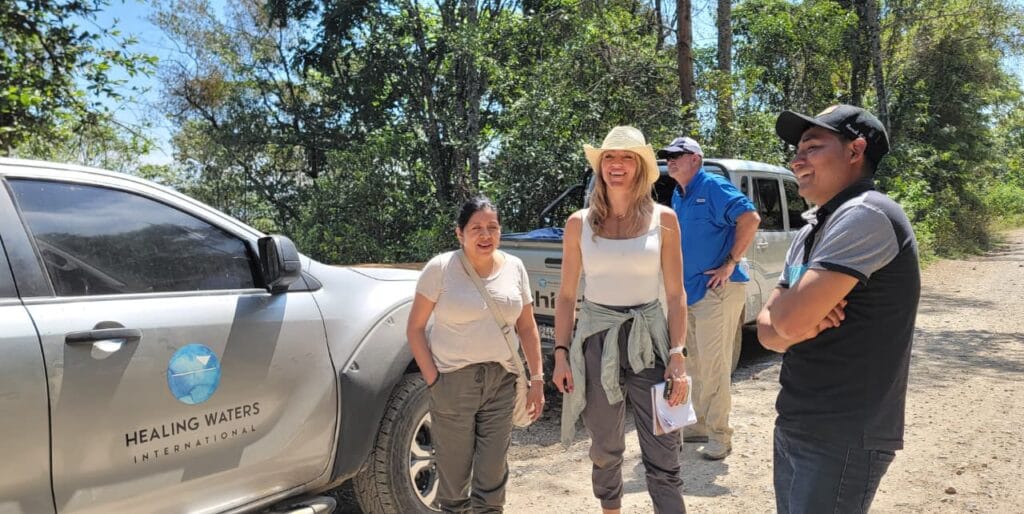
Pajal Phase 1: Seeing the Difference Water Makes
The next day, we visited Pajal Phase 1 and met with community leaders and members who shared what access to water has meant in their daily lives. Their stories were deeply encouraging, but they also revealed just how long and difficult the journey had been.
For years, water in Pajal had been scarce and inconsistent. Community leaders told us that twenty years ago, some families had only an inch of water flow. Later, they had two inches—still far from enough. As the community grew, the pressure on the system intensified. At one point, families were receiving water only every 18 days. Even after improvements, it was still every 12 days. The need shaped everything.
One leader, Jacinto, spoke of how central water is to life in the community:
“Of all of the needs that we have, the main one is water.”
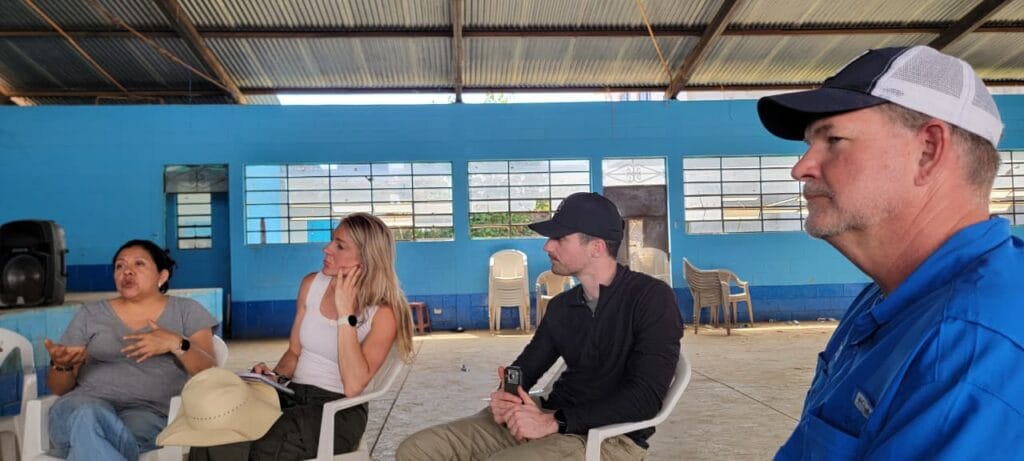
Families were paying what they could for water and electricity to power pumps, but when income dropped, especially in the non-harvest months between June and December, those costs became unbearable. Some would go into debt. Others would send family members to Mexico in search of work to help cover expenses. Water was prioritized above almost everything else, and as a result, other needs suffered.
Now, because of the work that has been done, there is measurable change. One leader told us, “People are happy because it doesn’t matter if it is dry season or rainy season, they have water.” That sentence stayed with me. In a place where life is often dictated by rainfall, to have even a measure of consistency changes everything.
Even so, the leaders kept encouraging the community. They kept telling people to hold on, to be patient, to trust that something would happen. That kind of leadership matters more than I can say. We heard again and again that the community had experienced many failed attempts and promises before. Trust had to be earned slowly. The leaders were essential in helping people stay hopeful through delays, uncertainty, and disappointment.
Listening to Stories in Phase 2
The following day, we traveled to the communities that would be part of Pajal Phase 2. Leti and I visited homes and sat with women whose daily lives revolve around the search for water. Their stories were marked by resilience, endurance, and a kind of strength that humbles you. More than once, I felt tears press against the back of my eyes.
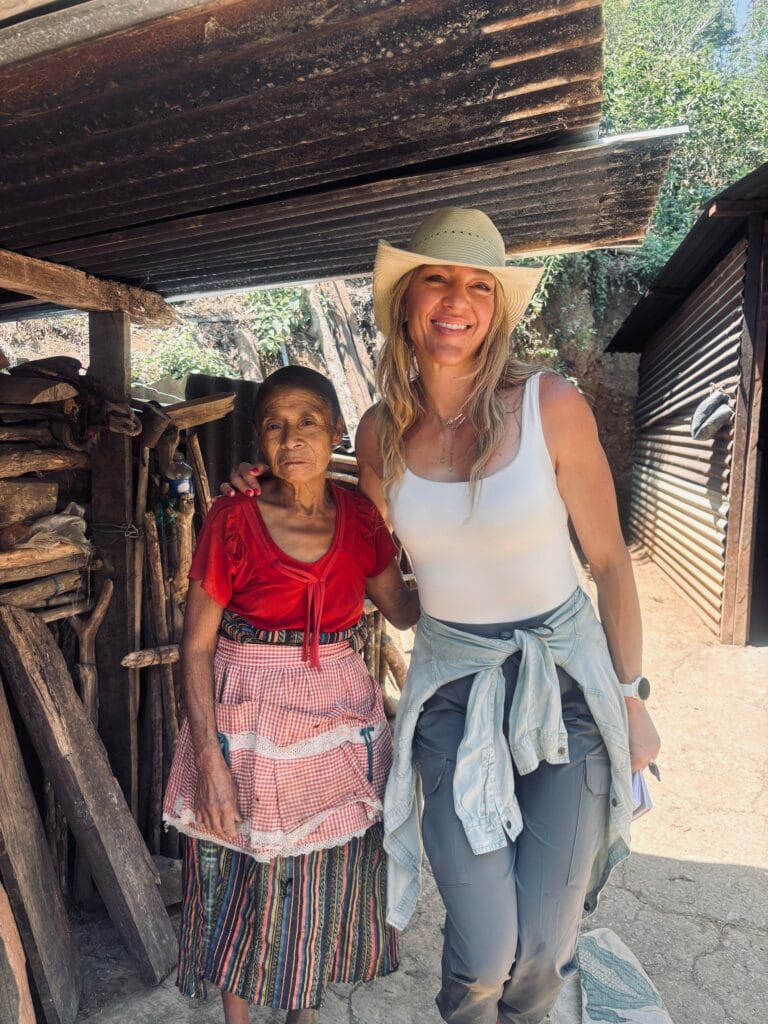
Everything in these communities revolves around rainfall. That truth became impossible to ignore. Families collect rainwater if they can. If they cannot, or if the rains do not come, they walk to farms or shared water points, carrying as many containers as possible. Some wake up at 3:00 a.m. to access small wells. Others make trip after trip to a communal pila—five times a day, sometimes ten. Water determines how time is spent, how bodies are worn down, what children are able to do, and what women carry, quite literally, on their backs.
One woman we met, Chrisobilia, has eight children, four sons and four daughters. She wakes up at 5:00 a.m. to prepare meals before her husband leaves for work at the coffee plantation. Then she and her daughters begin the exhausting process of fetching water. She told us it can take up to two hours just to gather and boil enough water for the day. Sometimes they go to the pila ten times in one day. Her son moved to the United States and sends money home to help support the family.
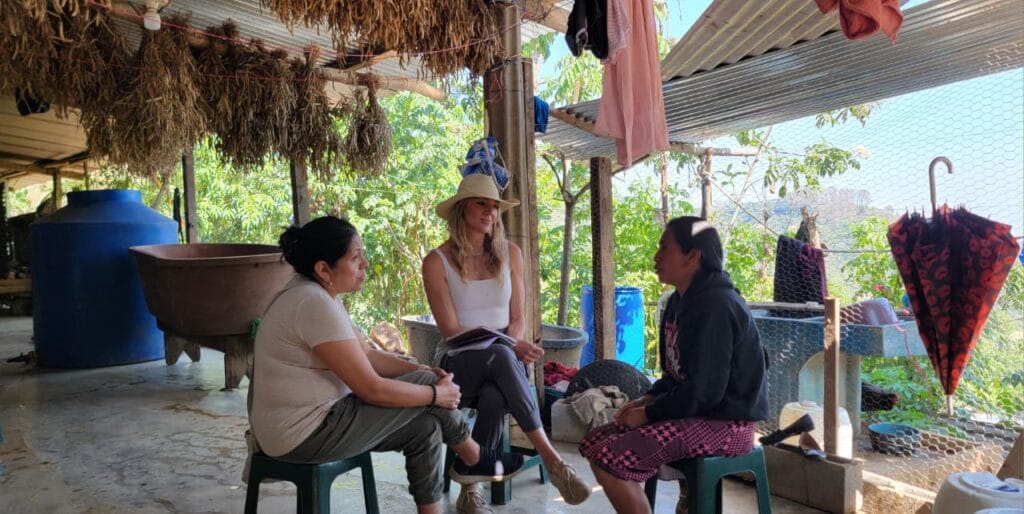
She said something I have not stopped thinking about:
“If we were able to get safe water, it would give us a normal life. We wouldn’t be spending several hours. We could rest and have a normal lifestyle.”
A normal life. That was her dream. Not luxury. Not excess. Just rest. Just enough water that her children would not have to suffer in the ways she has suffered.
Graciela
One of the most powerful moments of the trip came when we met Graciela.
Graciela cares for her 27-year-old son, Alexander, who is mentally and physically disabled. Their home sits high on the mountain, reached by steep roads and difficult paths. Her husband, David, carries Alexander on his back every Monday to take him to rehabilitation. Before rehab, Alexander could not walk at all. Now, thanks to the support of his family and some structural help to their home, he has more mobility. But their daily life remains unimaginably hard.
There is no water at their house.
Graciela walks down to the pila multiple times a day to get the water needed to care for her family and for Alexander. He has seizures and requires medication they can barely afford. He wears cloth diapers, which she must wash by hand at the pila. There is also a small well they can access, but to do so they must wake up at 3:00 a.m. Even then, the water is not safe and still must be boiled. Their family deals regularly with stomach sickness. The burden of caregiving in these conditions is relentless.
At one point she told us, “I won’t be here forever and my daughter will need to take care of him.”
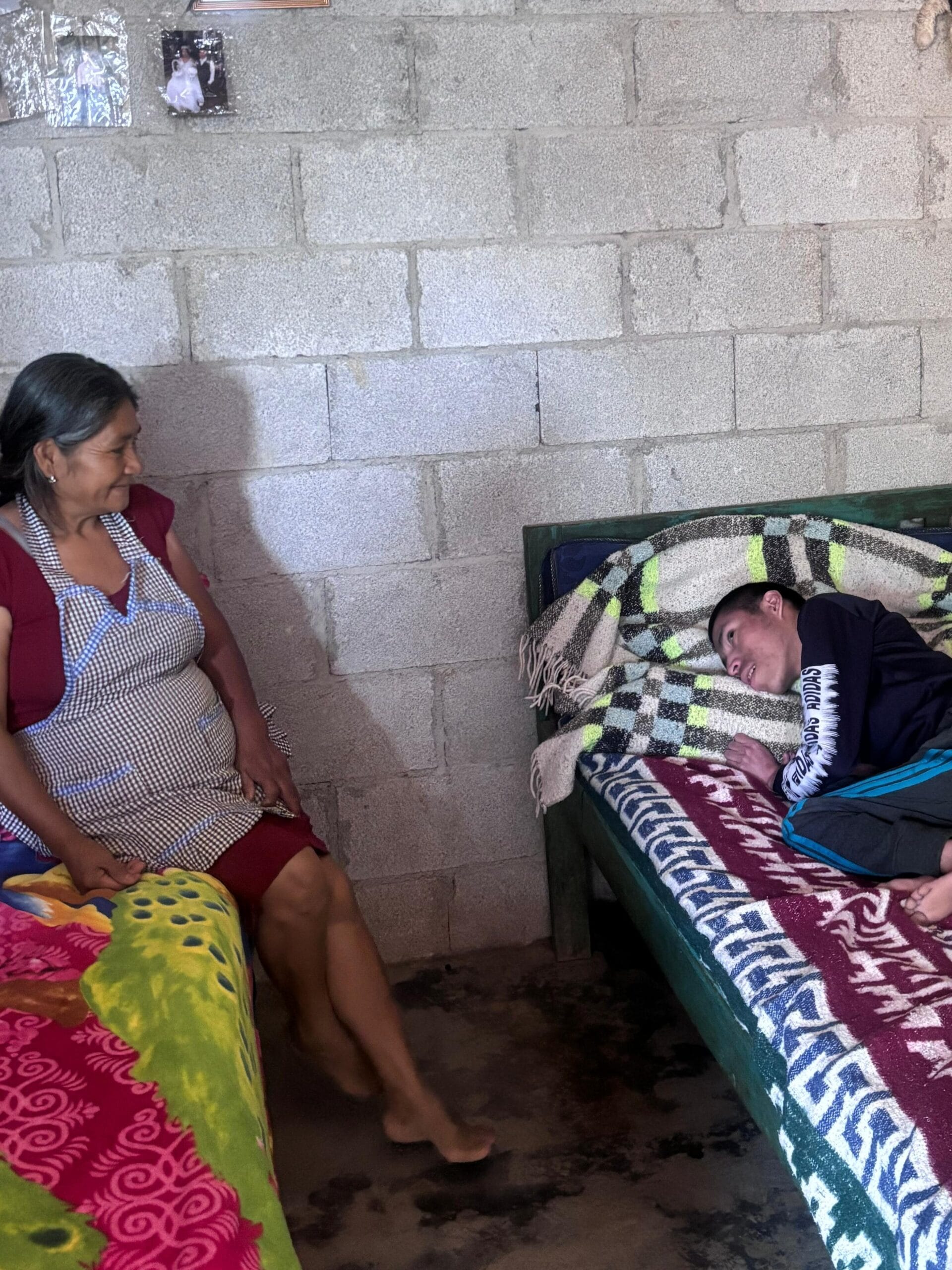
I had to step away for a moment after hearing her story. Tears filled my eyes. There are moments when listening becomes holy, when someone entrusts you with the weight of their life and there is nothing to do but receive it with tenderness. Graciela’s strength was astonishing, but so was her exhaustion. Her love for her son was visible in every word, every detail, every concern for his future.
The week before we met her, Alexander had nearly died after suffering several seizures.
It is impossible to hear a story like that and leave unchanged.
At the Pila
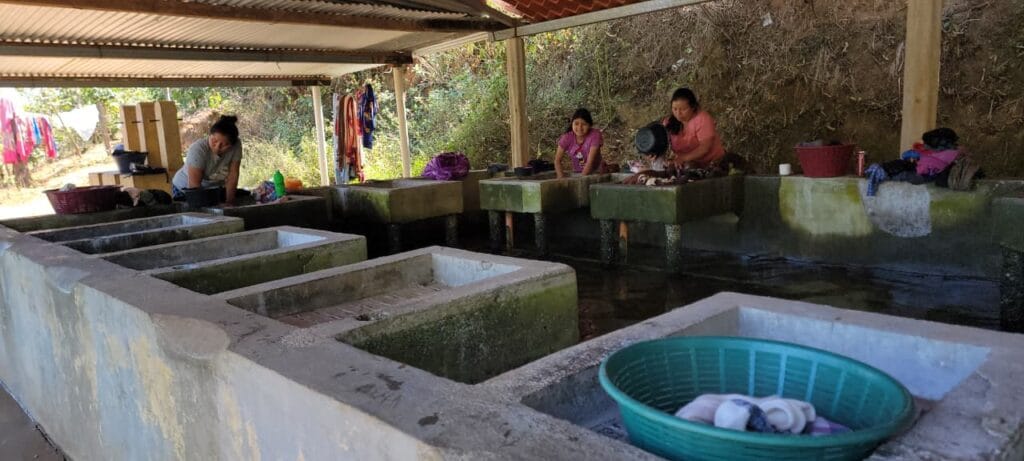
We also spent time with women gathered at the communal pila, the place where much of life happens. The pila is where women wash clothes, bathe, gather water, and share the burdens of the day. It is practical, communal, and deeply insufficient.
The mayor had built the pila for the community, and some had suggested that because they had this shared source, they did not need a more robust water project like the one in Pajal. But standing there, it was clear that the pila is not a solution, it is survival. The women told us most families go five times a day. The water is not filtered or clean. It comes through a single faucet. The women themselves are responsible for cleaning it. Its water volume changes based on rainfall. It is where they wash clothes and where they bathe, all while drawing water to drink and cook.
To call that adequate would be to misunderstand their reality.
And yet there was something deeply meaningful there too. The pila is more than a utility; it is a gathering place. A place where women see one another, help one another, and carry life together.
Faith, Dignity, and Hope
Throughout the trip, I was moved not only by the needs we saw, but by the faith of the people we met. Again and again, community members spoke about trusting God through years of waiting.
One leader told us,
“This would be a dream come true. We always dreamed of having a faucet in every home.”
Another said,
“We have waited for water for many years. Most of our lives we have wanted to believe in God that this will happen… We have seen God’s hand through this whole process.”
There was no bitterness in these statements. There was longing, certainly. Fatigue too. But also faith. A stubborn, enduring faith that God had not forgotten them.
Coming Home Different
When I came home, I could not stop noticing water.
I noticed sprinklers running. I noticed sinks left on. I noticed myself using the dishwasher, the washing machine, and the faucet without a second thought. Before this trip, I understood in theory that water matters. After this trip, I felt it in a different way. I saw how the absence of water steals time, health, energy, education, income, and dignity. I saw how women bear that burden most heavily. I saw how children’s futures are shaped by whether or not water reaches their homes.
Water is not just water. Water is time. Water is health. Water is opportunity. Water is relief. Water is dignity. Water is life.
And that is why this work matters so deeply.
To witness the impact of Phase 1 and the hope rising around Phase 2 was to see transformation unfolding in real time. Not perfectly. Not easily. Not without challenges. But truly. Families are beginning to imagine life differently. Children can spend more time in school. Women can reclaim hours of their day. Some can begin businesses. Communities can dream again.
This trip reminded me that the work of Healing Waters is not simply about installing systems. It is about helping restore what scarcity has stolen. It is about standing with communities as they move from survival toward dignity. It is about listening well, acting wisely, and remembering that every faucet, every pipe, every meeting, and every mile traveled leads back to people, people with names, stories, fears, faith, and extraordinary strength.
I left Guatemala deeply grateful, more aware than ever, and changed by the people I met.
And I keep coming back to that phrase I carried with me from the beginning: be fully present.
I am so thankful I was.