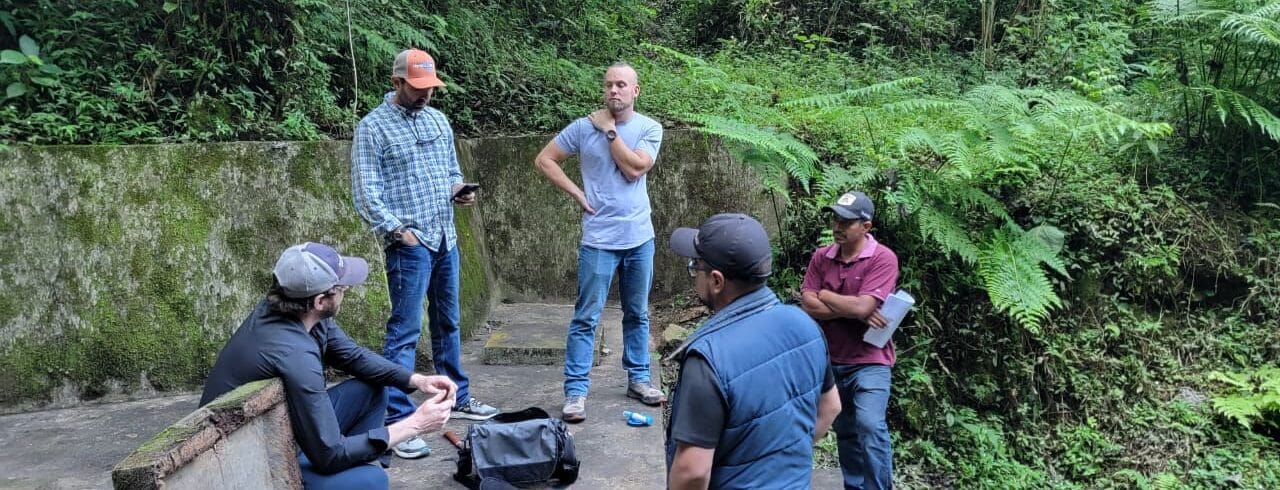
For many communities, the path to safe water is simple and accessible.
Pajal, Guatemala, was different.
High in the mountains of Huehuetenango, the communities of Pajal and Cipresales faced a challenge that had frustrated development efforts. Water existed, but accessing and purifying it sustainably in one of the region’s most rugged landscapes required a solution that had yet to be implemented.
Organizations worked alongside these communities to address poverty and improve livelihoods. Yet one obstacle remained. Without reliable access to safe water, long-term progress was limited.
That challenge has now brought together Healing Waters International, Hydrologica, and a team of engineers and technical experts to undertake the largest and most ambitious project in our organization’s history. More importantly, it represents a new way of thinking about how safe water can reach some of the world’s most difficult places. Engineering solutions developed here could be a model for serving remote mountain communities that have long been considered too difficult or too expensive to reach.
Rethinking the Impossible
For generations, communities like Pajal have lived with an impossible reality.
Villages sit high in the mountains while rivers flow hundreds of feet below. Bringing water uphill across steep terrain has traditionally required massive infrastructure, making projects financially and technically difficult to sustain.
Our original design reflected that challenge. Water would have been pumped nearly 1,000 feet uphill from a river through multiple pumping stations using miles of large-diameter pipeline and hundreds of solar panels.
Then the project took an unexpected turn.
Through a partnership with Hydrologica and other technical experts, Healing Waters began exploring whether groundwater hidden beneath the mountains could provide a better solution.
“The old design would have worked,” explains Jacob Johnston, R and D and Project Engineer at Healing Waters International. “But it required multiple pumps operating together, miles of pipeline, and a tremendous amount of solar infrastructure. The new design has the potential to accomplish the same goal much more efficiently.”
Looking Beneath the Surface
Finding groundwater in mountainous terrain is far from simple.
Unlike many places where detailed geological records are publicly available, rural Guatemala has very little accessible groundwater data. Drilling without reliable information can be an expensive gamble.
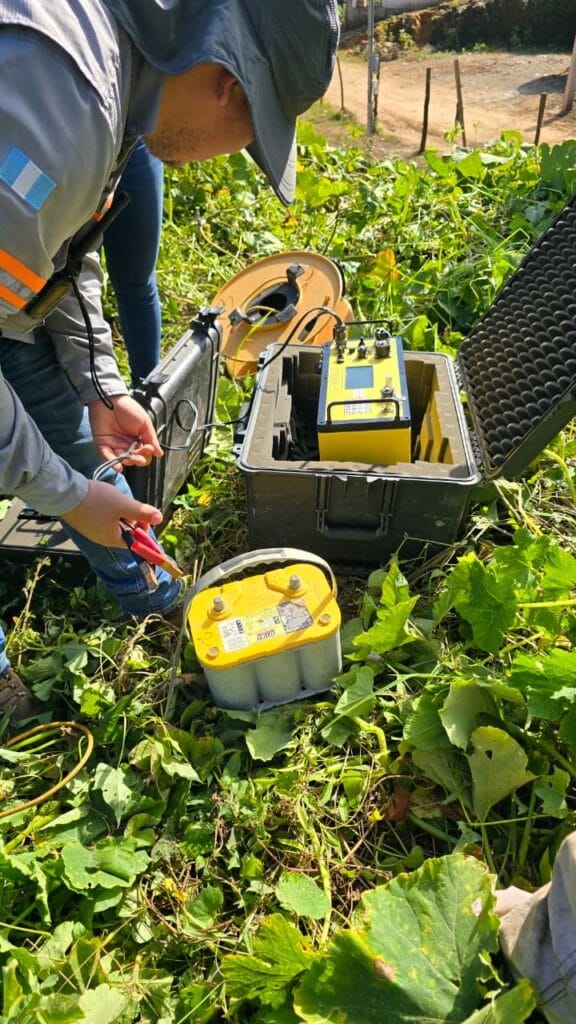
Rather than relying on guesswork, our partners conducted advanced electrical resistivity testing, a process that helps identify where groundwater is most likely to exist beneath the surface.
“Underground is really just a mystery to us,” says John Maggi, Americas Engineer at Healing Waters International. “The different types of rock yield different amounts of water, and without public geological data there’s always uncertainty. These studies allow us to make informed decisions instead of simply hoping we drill in the right place.”
Even with advanced testing, there are no guarantees. But the evidence gathered through these surveys gives the engineering team confidence as drilling begins.
“I feel really confident we’re going to find a tremendous amount of water,” says Maggi. “We’re in a region that receives significant rainfall, we’ve seen successful shallow wells nearby, and the data supports what we’re seeing in the field.”
A Smarter Approach
The shift to groundwater changes far more than the water source.
If the wells perform as expected, the system could operate with significantly fewer pumps, less pipeline, and far fewer solar panels than originally planned.
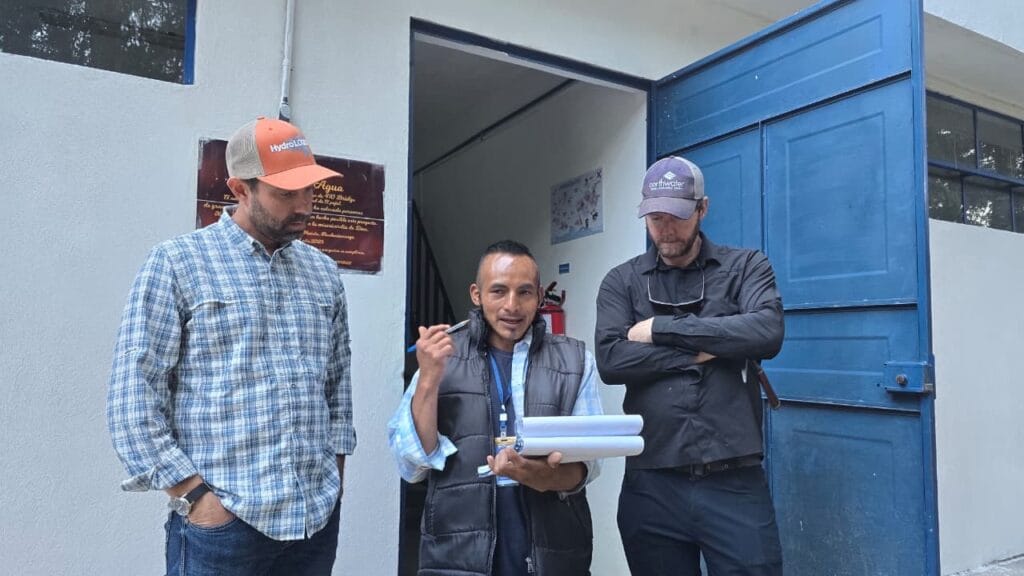
“The tradeoff in efficiency is huge,” says Jacob. “With the wells much closer to the community, we can potentially use one pump instead of several while producing the same amount of water. That changes the economics of the entire project.”
Those efficiencies make projects like this more sustainable over the long term while creating opportunities to serve other communities facing similar geographic challenges.
“It gives us a lot more flexibility,” Johnston explains. “There are many communities where water access is extremely difficult because of distance and elevation. This approach could allow us to work in places that previously would have been much harder to reach.”
Piped Water For All
The work extends far beyond drilling a well.
Every household has been mapped. Our engineers created detailed GIS models, collecting precise elevation measurements, designing new pipe networks, and preparing sophisticated hydraulic models that determine exactly how water will move through the system.
The water itself will be pumped using solar energy, purified through Healing Waters’ treatment process, stored in large reservoirs, and distributed directly to individual homes.
That matters.
Many rural water systems stop at public collection points. This project delivers purified water directly to households, providing a much higher level of service while reducing the burden on families.
Johnston says accurate engineering data is critical to making that happen.
“If your elevation data is wrong, even by a relatively small amount, it changes everything,” he says. “You can lose a significant amount of water production, or your pumps won’t operate the way they’re designed. That’s why we’re investing so much effort into getting every measurement right.”
More Than One Community
The significance of this project reaches beyond Pajal and Ciprasales.
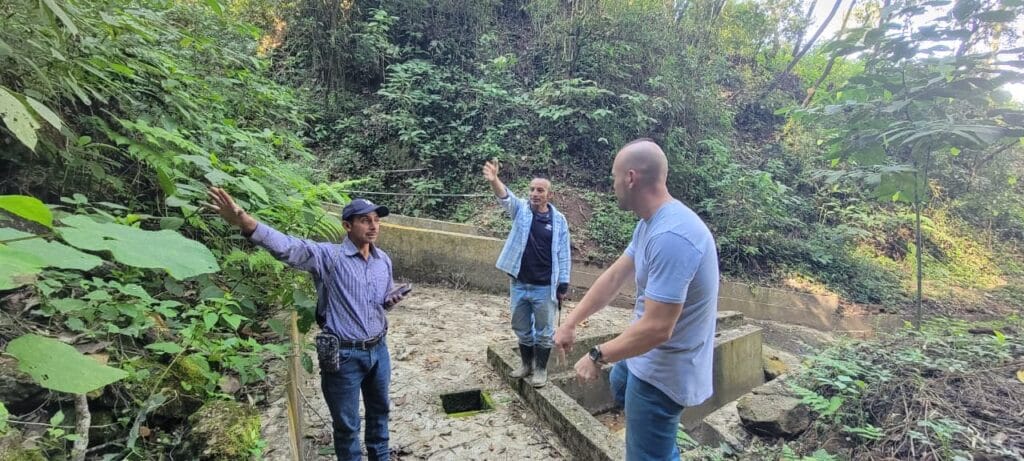
As Healing Waters develops expertise in designing complex rural piped water networks for mountainous regions, the organization is building knowledge that can be applied across Latin America and other difficult environments.
“We’re becoming specialists in rural piped water systems,” says Maggi. “That differentiates us from many organizations that simply drill wells and install public taps. We’re designing complete water networks that bring purified water directly to people’s homes.”
Those lessons could influence how future projects are designed in communities where traditional approaches have proven too costly or technically challenging.
Looking Ahead
In the coming months, drilling crews will begin one of the most anticipated phases of the project. Once groundwater is successfully accessed, construction will move forward on what will become the largest safe water system Healing Waters has ever built.
For families in these mountain communities, it means something profoundly simple. Safe water flowing directly to their homes for the first time.
For Healing Waters International, it represents something larger.
Not only the completion of our biggest project to date, but the beginning of a new chapter in how abundant safe water can be delivered to places many once believed were beyond reach.