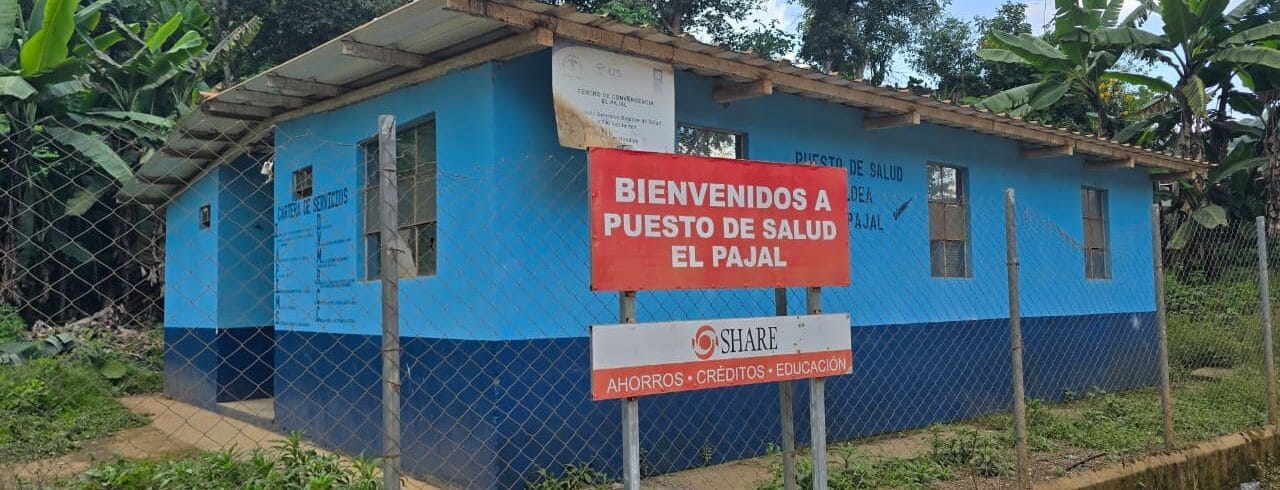
For one community clinic in Guatemala, reliable access to safe water could transform the care its health workers provide—and the health of hundreds of families.
Every day, approximately 40 patients walk through the doors of a local health clinic serving El Pajal and surrounding communities. Some come for childhood vaccinations. Others need prenatal care, treatment for common illnesses, help managing chronic conditions, or care for their newborns.
For many families, this clinic is their first point of access to healthcare. But behind the important work happening inside its walls is a challenge that has made providing even basic medical care more difficult: a lack of reliable, safe water.
The clinic is part of the community where Healing Waters International is implementing its largest water project to date. Through this project, the clinic will receive a direct connection to a new water distribution network, bringing safe water right to its doors.
For Sairy Salazar, the nurse at the clinic, and her colleagues, this change represents far more than improved infrastructure. It means the ability to provide safer, more dignified care.
Caring for Hundreds, Without the Water to Care for Them
The clinic serves approximately 200 to 250 patients each week, offering a wide range of essential health services. These include general consultations, childhood vaccinations, prenatal and postpartum care, newborn checkups, family planning, growth monitoring, and minor surgeries.
Healthcare workers regularly treat common colds, bacterial tonsillitis, diarrhea, hypertension, diabetes, and skin conditions. They also play an important role in identifying illnesses early, preventing disease, and referring patients who need more specialized treatment.
But providing this level of care is challenging when basic resources are limited.
Along with shortages of medical supplies, equipment, and staff, the clinic has faced a persistent lack of drinking water and electricity.
Sairy describes a situation that has become part of everyday life.
“Here at our health clinic, we only have one water storage tank. Water is typically delivered every 15 to 20 days,” she explained. “We are often told there is a water shortage, so we have to be very careful about storing and using what we have.”
The uncertainty makes it difficult to plan for the clinic’s daily needs. When water is unavailable, Sairy and her colleagues must carefully manage their limited supply and find other ways to meet essential needs.
The clinic purchases water for drinking, cleaning the facility, and washing and disinfecting medical instruments. Water for other uses, including handwashing and sanitation, is carefully managed in buckets.
The clinic even has handwashing sinks that healthcare workers have never been able to use because of the lack of a consistent water supply.
When Water Insecurity Becomes a Health Crisis
In a healthcare setting, water is not simply a convenience. It is essential to preventing infections, maintaining sanitation, and protecting patients.
Without reliable water, the clinic cannot be cleaned as thoroughly as it should be. Disinfecting medical instruments becomes more difficult, and healthcare workers must spend valuable time managing water instead of focusing on patient care.
The consequences extend beyond the clinic.
During general consultations, Sairy regularly sees patients experiencing illnesses she believes are connected to unsafe water.
“Some of the most common conditions we see are stomach illnesses and diarrhea,” she shared. “We see these cases most often among children under two, pregnant women, and older adults.”
These illnesses can have serious consequences, particularly for young children. Diarrheal diseases and parasitic infections can contribute to malnutrition, interfere with healthy development, and cause children to miss school.
Unsafe water also creates challenges for mothers and newborns. When families struggle to access clean water, preparing food and maintaining proper hygiene becomes more difficult, increasing health risks for the most vulnerable.
Sairy recalled one particularly difficult day when an entire family came to the clinic seeking treatment. A mother, father, and their three children were all experiencing stomach pain, diarrhea, and nausea.
It is a reminder that unsafe water doesn’t affect just one person. It can impact an entire household at once.
And for families already facing financial challenges, the burden continues long after the illness passes. Many must purchase drinking water in small bags, adding expenses to already limited household budgets. The uncertainty of not knowing when water will be available can also create anxiety and conflict within families.
A New Water System Means Better Healthcare
Through Healing Waters International’s largest project to date, this clinic will soon have direct access to safe water through a community distribution network.
For the healthcare workers, the impact is clear.
Eduardo Martínez, who also serves in the local health sector, has seen firsthand how long the clinic has operated without a reliable water connection.
“We have been here at the Pajal health clinic for about 10 years without access to water through a distribution network,” Eduardo explained. “Having this service would make a tremendous difference and benefit us greatly.”
Reliable water will allow the clinic to finally use its existing handwashing sinks, maintain a cleaner and safer environment, and more effectively disinfect medical instruments.
It will also reduce the time healthcare workers spend searching for, purchasing, and managing water. That time can instead be devoted to what matters most: caring for patients.
“We would benefit tremendously, especially when it comes to washing our hands while attending to patients,” Eduardo shared.
For Sairy, having the resources necessary to provide quality care means being able to serve patients with greater dignity and confidence.
“We will be able to provide better, higher-quality care,” she explained. “It will save us time so we can attend to cases and focus on improving our services.”
The project will help create an environment where patients can receive the care they deserve, without the added challenges that come from a lack of water.
The Impact Will Reach Far Beyond the Clinic
The benefits of this project won’t stop at the clinic’s doors.
When families have access to safe water, they can reduce preventable illnesses, prepare food more safely, improve nutrition, and spend less money seeking treatment for water-related diseases.
Children have a better opportunity to grow up healthy, maintain a healthy weight, and attend school consistently. Parents can spend less time worrying about where their next supply of water will come from and more time caring for their families.
Eduardo believes the difference will be felt throughout the entire community.
“Children will be healthier, and there will be fewer illnesses,” he said. “Many families currently have to buy water because they don’t have access to it. This will help them save money.”
He also pointed to an impact that reaches into the future: education.
When children become sick because of unsafe water, they often miss school. With fewer water-related illnesses, children can attend classes more consistently and have greater opportunities to learn and develop.
“Children will be better prepared because when there isn’t safe water, children get sick and stop attending school,” Eduardo explained.
For him, this project represents an investment in the well-being and future of the entire community.
A Right Everyone Deserves
For years, Sairy and her colleagues have continued serving their community despite the challenges of unreliable water. They have found ways to adapt, making difficult choices with limited resources while caring for hundreds of people each week.
But they know how much more they could do with the right resources.
When asked what he would say to the people making this project possible, Eduardo offered a heartfelt message of gratitude.
“First, I want to thank you for setting your eyes on our community,” he shared. “We all need access to dignified water. Many families will be happy, and many children will be happy. We all have the right to have dignified water.”
His words reflect what this project means to the people who will experience its impact every day.
For Sairy, the hope is simple: a future where fewer families experience preventable illnesses and where healthcare workers have the resources they need to care for their patients.
And one year after the water system is complete, Sairy hopes to see patients who are more comfortable, more satisfied, and happier because they are receiving better care.
At Healing Waters International, we believe access to safe water is about more than meeting a basic need. It is about creating the conditions for health, opportunity, and lasting change.
For this clinic, that future begins with something as simple and as essential as turning on a tap.
Because before healthcare can reach its full potential, healthcare workers need the resources to provide it. And it all begins with safe water.